

Don't miss:
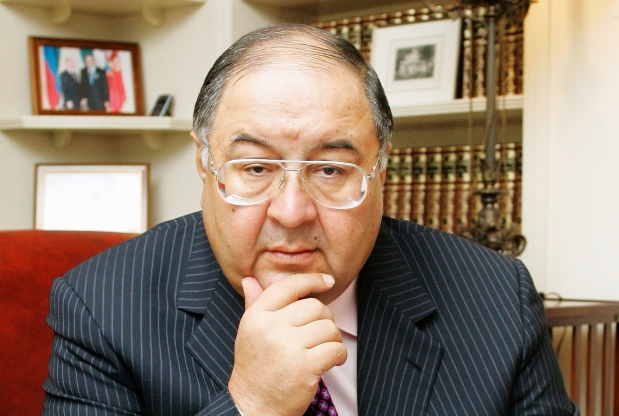
Russian billionaire Alisher Usmanov sits in his office in Moscow September 3, 2007. A firm co-owned by Usmanov said on August 30, 2007 it had bought a 14.6 percent stake in UK soccer club Arsenal from former Vice Chairman David Dein for 75 million pounds ($150.6 million). Picture taken on September 3, 2007.
Photograph by: SERGEI KARPUKHIN , REUTERS
LONDON — When Alisher Usmanov began his efforts to ingratiate himself in the West, he did so in the knowledge that there were aspects of his past that he’d prefer to keep hidden.
The oligarch, who came second in this year’s Rich List — a Sunday Times of London ranking of the world’s wealthiest people — with an estimated fortune of more than $12 billion, has gone to great lengths in his attempt to buy his way into the British Establishment.
He has sponsored a Russian exhibition of paintings from Tate Britain, taken a minority stake in the Arsenal soccer team and bought several prestigious properties, including the historically important Beechwood mansion in Hampstead as well as Sutton Place, the former home of John Paul Getty in Surrey.
Now the Uzbek-born billionaire, who lives in Moscow and has close ties with the Kremlin, is preparing to float the telecom company MegaFon on the London Stock Exchange.
Despite Usmanov’s best endeavours, though, he has found himself facing repeated questions over his colourful history and his relationship with alleged criminal associates.
In response, the oligarch has hired the services of RLM Finsbury, the large public relations firm founded in 1994 by Roland Rudd, a former journalist, to hit back at negative media reports.
However, despite the efforts to suppress discussion of his past, anyone accessing the oligarch’s Wikipedia entry in early August 2010 would have found a detailed article with descriptions of many of these controversies backed up by 40 external references.
On the afternoon of Aug. 19 two years ago, an unnamed employee at RLM Finsbury’s London offices opened a new front in the company’s fierce attempts to protect their client’s reputation. Without declaring that they were paid to represent Usmanov’s interests, the Finsbury employee started making changes to his Wikipedia entry.
Usmanov was born in a small town in Uzbekistan in September 1953, the son of a state prosecutor, and enjoyed a privileged upbringing as a member of the country’s small political elite. He was educated at the Moscow State Institute of International Relations and had hoped to pursue a career as a diplomat before a court case in 1980 brought a sudden end to these ambitions.
It is this court case and the resulting jail sentence that Usmanov is most sensitive about.
In September 2007, Craig Murray, the outspoken former British ambassador to Uzbekistan, described the billionaire as a “gangster and racketeer who rightly did six years in jail.” In response, Usmanov hired Schillings, the libel specialists, to take action against bloggers who were repeating Murray’s allegations.
In an effort to comply with a letter from the law firm, one Internet hosting company took down a blog that had reposted Murray’s allegations. In the process, they temporarily took several other blogs offline, including one belonging to London mayor Boris Johnson, prompting the then-Tory MP declare it “a serious erosion of free speech”.
“This is London not Uzbekistan. It is unbelievable that a website can be wiped out by some tycoon,” Johnson said at the time.
In August 2010, the Finsbury computer user deleted all reference to the incident, removing several accurate paragraphs and citations linking to reports by The Times of London and the BBC.
Details of Soviet-era criminal convictions are notoriously difficult to establish, but The Times obtained a document which confirms that Usmanov was convicted for fraud, theft of state or civil property and conspiracy to receive bribes on Aug. 19, 1980. He was sentenced to serve eight years.
Usmanov has always maintained that his jailing was politically motivated and the Finsbury user tried to play down the affair, removing the word “criminal’ from a section heading and deleting widely reported details of the allegations.
Supporting the businessman’s claims is the fact that he was exonerated in a ruling by the Supreme Court of Uzbekistan in 2000, which concluded that no crime had been committed, although doubts have been raised about the court’s independence.
Steve Swerdlow, the former head of the Tashkent office of Human Rights Watch, says the Supreme Court was simply a political tool, describing how HRW’s office was closed “in a five-minute hearing which we were given no notice to prepare for.”
He added: “The judiciary in Uzbekistan is notorious. Not only is it corrupt, but it completely lacks independence.”
Usmanov has also faced questions over his links with the ruling family, and in particular with the President Karimov’s daughter, Gulnara.
The oligarch has previously said that he has “no relationship, business or political alliances with Ms. Karimova” and had only met her “during official events organized by the Uzbekistan Embassy and by the Cultural Fund of Uzbekistan in Moscow”.
However, The Times learned they both recently attended a society wedding in Tashkent at which Usmanov gave a toast thanking Ms. Karimova for attending. Sources close to Usmanov insisted that he did not pledge his support for her future political ambitions, but his speech comes at a difficult time for the president’s daughter, who has been linked to a Swiss money laundering investigation over allegations that she accepted hundreds of millions of dollars in bribes.
Usmanov was granted early release for good behaviour in 1986 and quickly set about making his fortune. He set up a company selling plastic bags in Moscow, before moving into banking and natural resources. Although he insists that he has always been an “honest businessman,” Usmanov has faced allegations about his relationship with Gafur Rakhimov, an Uzbek organized crime boss.
In 1998, Usmanov admitted to reporters that he knew Rakhimov “from many years ago” and had been surprised by allegations that he was a major drugs trafficker.
“I have known him 20 years,” he said at the time. “He has helped my parents. But there is no close relationship, no business link.”
More recently he has played down their relationship, insisting that he “only knew him since he was a neighbour of my parents.”
Paddy Rawlinson, an organized crime expert, says the period was a difficult time to do business because Uzbekistan was “mired in criminality.” Rawlinson says there was a widespread need for businesses to pay for protection from crime lords and that “organized crime and politics were inextricably linked.”
This year, the U.S. Treasury imposed sanctions against Rakhimov, freezing his American-based assets and describing him as a major heroin trafficker who is one of “seven key members” of the Brothers’ Circle crime syndicate.
The oligarch also has long-standing links with Lord Owen, the former Labour Foreign Secretary and Social Democratic Party leader, and has helped the peer with a string of business investments in Russia. Lord Owen said that not everything Usmanov did in his youth was perfect, but that his conviction was the result of KGB attempts to get at his father, a prominent prosecutor.
Lord Owen says Usmanov was chastened by the experience.
“The effect is that he is more than happy to go by the book, by and large. The last thing he wants to do is to get in trouble with the law.”
Usmanov has built up a varied portfolio of investments in recent years, including shares in Facebook and Zynga, the computer games company.
He has taken control of Megafon, Russia’s second-biggest mobile operator, which had been the subject of a lengthy ownership dispute culminating in the mysterious disappearance of Leonid Rozhetskin, a former shareholder. Rozhetskin claimed in court documents that he had been threatened with physical harm if he didn’t transfer his stake.
As Usmanov’s Wikipedia entry stated in August 2010: “Mr. Rozhetskin disappeared in March 2008 from his vacation home in Latvia. Latvian police found bloodstains in his home. Although Mr. Rozhetskin was missing at the time, his New York lawyers settled in May 2008 the outstanding legal dispute with IPOC (a Bermuda-registered investment fund which sold its shares to Usmanov), thereby removing legal uncertainties regarding the ownership of Megafon and the sale to Usmanov.”
A body, which police believe to be that of Rozhetskin, was discovered in a remote forest in Latvia in August.
Rozhetskin’s mother, who has previously said she believes that he was killed by hired Russian agents because he was attempting to expose corruption, declined to comment when approached by The Times. There is no suggestion Usmanov was involved in Rozhetskin’s death.
The Finsbury computer user removed all references to Rozhetskin and to the dispute over Megafon’s ownership. At the same time, the user bolstered a section on Usmanov’s “other activities,” writing that he “takes a keen interest in and is a prominent collector of the arts”.
They increased the price that he paid for an art collection owned by a famous Russian cellist from 30 million pounds to “more than pounds 35 million,” and added a sentence stating: “In addition, he has sponsored major art exhibitions, a number of theatrical projects and the First International Pavel Lisitsian Baritone Competition.”
Usmanov is seen as a close ally of Dmitry Medvedev, the Russian prime minister, and in 2006 he bought Kommersant, formerly an independent paper owned by the outspoken exile Boris Berezovsky, in a move widely viewed as a favour to the Kremlin.
The Finsbury computer user deleted a quote on Usmanov’s Wikipedia page from an article in Forbes, the American business magazine, which stated that this was “on the encouragement of the Russian government.”
It was more than a month before a volunteer editor spotted the deletions made to Usmanov’s Wikipedia entry and changed it back to its previous state. A short while later, in mid-October, someone using an IP address at RLM Finsbury went in and deleted the offending sections again.
This time it lasted only a matter of seconds because an automated “bot’ which was monitoring the page for vandalism reverted the edits.
In a statement, Finsbury said: “There were serious and incorrect allegations added anonymously to Mr. Usmanov’s Wikipedia entry. These could not be left unanswered and we had no choice but to correct these. However, this was not done in the proper manner nor was this approach authorized by Mr. Usmanov. We apologize for this and it will not happen again.”
The Sunday Times of London with files from the associated press
© Copyright (c) The Ottawa Citizen
- E-mail this Article
- Print this Article
- Share this Article



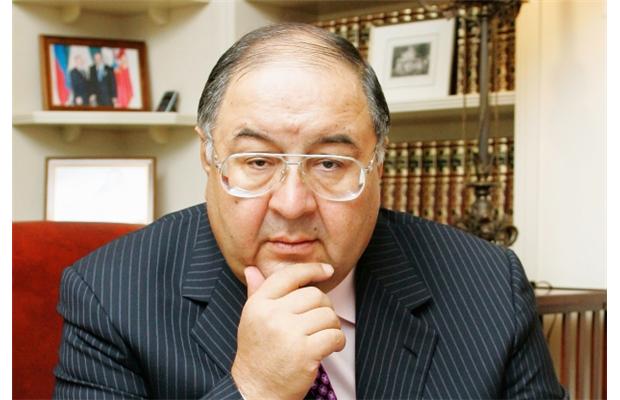
Russian billionaire Alisher Usmanov sits in his office in Moscow September 3, 2007. A firm co-owned by Usmanov said on August 30, 2007 it had bought a 14.6 percent stake in UK soccer club Arsenal from former Vice Chairman David Dein for 75 million pounds ($150.6 million). Picture taken on September 3, 2007.
Photograph by: SERGEI KARPUKHIN, REUTERS


- E-mail this Gallery
- Print this Gallery
- Share this Gallery
More Photo Galleries

We recommend
From around the web
-
Dolce & Gabbana Trial Date Set (Vogue)
-
BT’s killer RABIT foils copper cable thieves (Recombu Digital)
-
New Honda Civic Type-R will arrive in 2015 (Auto Express)
We encourage all readers to share their views on our articles and blog posts. We are committed to maintaining a lively but civil forum for discussion, so we ask you to avoid personal attacks, and please keep your comments relevant and respectful. If you encounter a comment that is abusive, click the "X" in the upper right corner of the comment box to report spam or abuse. We are using Facebook commenting. Visit our FAQ page for more information.
NEWS IN PICTURES


The Ottawa Citizen Headline News
Sign up to receive daily headline news from The Ottawa Citizen.
Latest updates

Sesame Street's target audience remains blissfully unaware amid sex claims
First, Big Bird became an unwitting player in a presidential debate that argued for clipping his wings.
Comments (0)